Growth Hormone Secretagogues: Mechanism Overview
Growth hormone secretagogues (GHS) stimulate endogenous GH release rather than supplying exogenous GH directly. They operate upstream of GH itself — at the level of pituitary somatotrophs — preserving the feedback architecture of the GH/IGF-1 axis. Two distinct receptor pathways are targeted: GHRH receptors (somatotroph activation) and ghrelin receptors (GHSR-1a, which independently trigger GH release).
GHRH Analogues
Sermorelin (GRF 1–29)
The shortest bioactive GHRH fragment with full receptor affinity. Half-life is approximately 10–20 minutes, producing discrete GH pulses when dosed pre-sleep to align with natural nocturnal GH secretion patterns. The shortest-acting and most physiologically conservative option in this class.
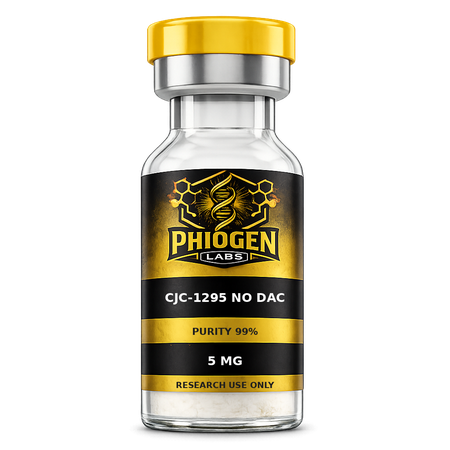
CJC-1295 (No DAC)
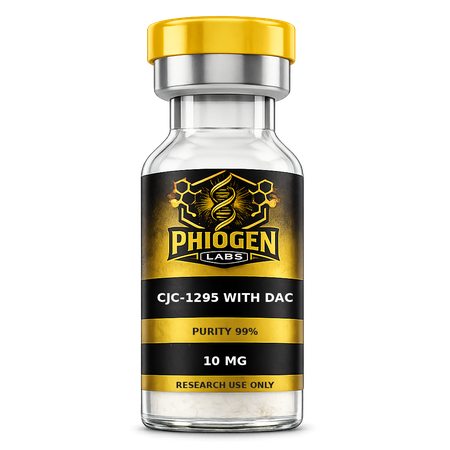
A modified GHRH analogue with four amino acid substitutions that improve plasma stability and enzymatic resistance. The No DAC formulation retains an ~30-minute active window, maintaining pulsatile GH kinetics. The DAC variant (with Drug Affinity Complex) extends half-life to 6–8 days via albumin binding, producing sustained GH elevation that flattens natural pulsatility — generally avoided in pulse-based research protocols.
Tesamorelin
FDA-approved (2010) for HIV-associated lipodystrophy — the only GHRH analogue with Grade A clinical evidence in humans. Trials demonstrated significant visceral fat reduction and improved lipid profiles. Its full 44-amino-acid sequence mirrors native GHRH more closely than truncated analogues, providing the strongest translational basis for human GH-axis research.
Ghrelin Receptor Agonists (GHRPs)
Ipamorelin
A synthetic pentapeptide GHSR-1a agonist. The critical differentiator from older GHRPs: Ipamorelin does not elevate cortisol or prolactin at research doses. GHRP-2 and GHRP-6 are non-selective and trigger ACTH-cortisol release, complicating interpretation in any protocol sensitive to cortisol. Ipamorelin is the standard reference GHRP for modern research protocols.
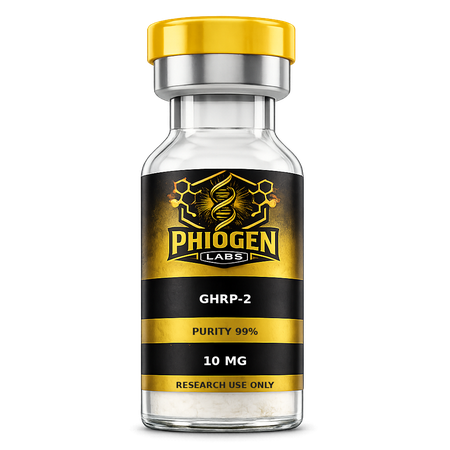
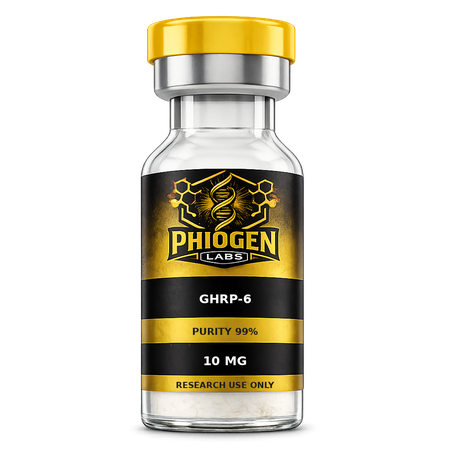
GHRP-2 and GHRP-6
Older hexapeptide secretagogues with stronger GH pulse amplitude than Ipamorelin but with documented cortisol and prolactin elevation. GHRP-6 also potently stimulates appetite via ghrelin pathway activation — a variable that complicates metabolic research. Both retain utility in specific contexts but are less preferred than Ipamorelin for clean GH axis stimulation.
Combining GHRH and GHRP: Synergistic Pulses
GHRH analogues and ghrelin receptor agonists work through non-overlapping receptor systems. When combined, they produce GH pulses significantly larger than either compound alone. The Ipamorelin + CJC-1295 No DAC combination is the standard dual-mechanism stack: CJC-1295 amplifies the magnitude of GH release while Ipamorelin triggers the release event. Timing both within a 5-minute window maximizes synergy.
IGF-1 LR3 — Downstream GH Signalling
IGF-1 LR3 is a recombinant IGF-1 analogue with a 13-amino-acid N-terminal extension that reduces IGF-binding protein (IGFBP) affinity. This extends half-life from ~15 minutes (native IGF-1) to approximately 20–30 hours. It acts downstream of GH — directly at IGF-1R on muscle, bone, and other tissues — and does not require GH axis activation.
Evidence Quality
Tesamorelin holds the only approved-drug evidence grade in this class. Ipamorelin and CJC-1295 have robust Phase 1/2 data. Sermorelin has historical clinical data from growth hormone deficiency studies. GHRP compounds have extensive preclinical and early human data but lack large Phase 3 trials.
Typical Research Protocols
Pulse-based protocols dose GHRH + GHRP combinations pre-sleep and optionally post-fasting (morning, pre-workout). Avoiding carbohydrate intake within 90 minutes of dosing reduces somatostatin tone, which blunts GH release.